Decca Studios
165 Broadhurst Gardens London


Decca Studios at 165 Broadhurst Gardens was one of Britain’s most important and historic recording facilities.
The building in London NW6 was built as The Falcon Works, a set of engineering workshops in 1884. It soon went into bankruptcy and was taken over by the local council to become the West Hamstead Hall. It was converted to a recording studios in 1933 for Crystalate Records. In 1937 the company was bought out by Decca and Broadhurst Gardens became the company's third and final home base.
Decca Records in the UK during the 1950s–60s was a major powerhouse of British music. In the 1950s, Decca was best known for high-quality recordings of traditional pop, jazz, and classical music. They had a reputation for excellent sound engineering and released influential jazz and skiffle records that helped set the stage for British rock.

In the 1960s, Decca became central to the British pop explosion. They signed and recorded The Rolling Stones, Small Faces, The Moody Blues, Tom Jones, John Mayall’s Bluesbreakers, David Bowie and many others. Famously, they rejected The Beatles in 1962 after they had auditioned 15 songs in Studio 2.
Long before it became synonymous with hit records and groundbreaking audio engineering, 165 Broadhurst Gardens had a very different life.
Originally constructed in 1884 as The Falcon Works, the site was divided into engineering workshops rented to small local businesses. The venture was short-lived and soon went bankrupt.
After lying unused for several years, the building was taken over by the local council and became West Hampstead Town Hall. Part of it was converted into a large banqueting hall used for public events, including meetings, concerts, plays, and religious ceremonies including Jewish weddings.
In 1891, a second, smaller hall was added at lower ground level to the rear of the building.
Crystalate Records
In the 1920s, Crystalate Records began renting space within the building, using the main banqueting hall for recording.Founded in 1901, the Crystalate Manufacturing Company Ltd. initially produced plastic goods such as billiard balls and bottle stoppers. It later became one of the UK’s earliest innovators in record pressing and manufacturing.
Until 1922, Crystalate pressed records for other companies. It then began acquiring labels, including the Sound Recording Company, as well as the Embassy and Rex labels. These records were sold widely on the high street, including exclusive ranges for major retailers such as Woolworths and Marks & Spencer. The company also produced records for specialist markets, including Jewish, Dutch, and French audiences.
Two key developments in the late 1920s would shape both Crystalate’s future and that of Decca. The first was securing the lease on 165 Broadhurst Gardens, allowing the company to establish a permanent recording base.
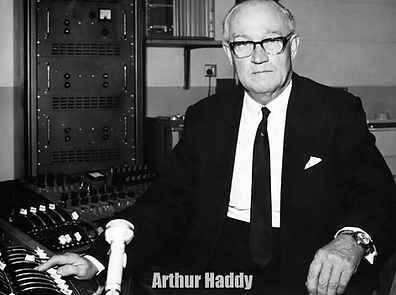
The second major development was the recruitment of Arthur Haddy, a talented engineer from Western Electric. He was brought in to design and run the studios, pushing beyond the technical limitations of the time. He would later become one of the pioneers of stereo recording and disc technology.
“We always recorded during the day before the evening revels began… The artists sang into trumpets fitted through holes in the corridor door… At the end of the day, we had to clear everything away so the caterers could set up". Arthur Haddy
In 1931, Kenneth Wilkinson joined Haddy. Together, they drove major advances in sound recording that would set new international standards.
Decca Takes Over
The Great Depression hit the record industry hard, and Crystalate’s record division struggled to survive. Decca, too, faced serious financial difficulties.Originally a manufacturer of portable gramophones, Decca had been acquired in 1928 by stockbroker Edward R. Lewis, who expanded the company into record production by purchasing the Duophone Record Company. Through a series of acquisitions in both the UK and the United States, he managed to keep the company afloat during the worst of the Depression.In March 1937, Decca acquired Crystalate’s record division — a move that proved transformative.Crystalate brought with it superior recording quality, two well-designed studios at Broadhurst Gardens (including one with a Wurlitzer theatre organ), and one of the best engineering teams in the industry. Decca closed its existing studios, moved operations to Broadhurst Gardens, and placed Arthur Haddy in charge of technical development. He would go on to become Chief Technician and later a director of the company.


World War II and ‘ffrr’
During World War II, Haddy and his team were redirected to military research. One key project involved recording and analysing submarine sounds, which required a much wider frequency range than existing technology allowed.
This work led directly to the development of ffrr (full frequency range recording), which would revolutionise sound quality in the post-war recording industry.

The Studios
The studios and their equipment evolved significantly over three decades.
Studio 1
Size 47’ × 38’, height 22’ | Control room: 16’ × 24’. Originally the town hall’s banqueting hall, Studio 1 was a two-storey space. The control room was positioned on the first floor at the rear, looking down into the studio - similar in concept to Abbey Road Studio 2.It could accommodate anything from a solo performer to a chamber orchestra of around 25 musicians, but not a full symphony orchestra. Larger sessions were held at venues such as Kingsway Hall or Walthamstow Town Hall. Adjustable wall panels allowed the acoustics to be modified, and in 1957 two natural echo chambers were added on the roof.

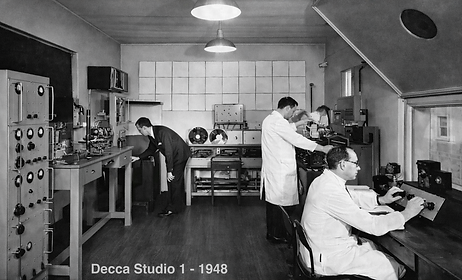
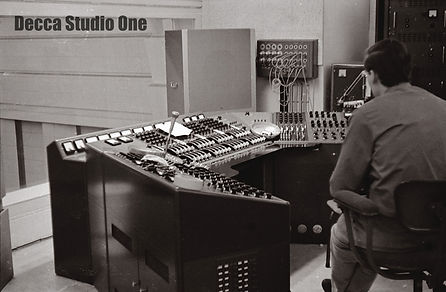
The upstairs control room of Studio 1 with the window on the right looking down onto the studio area. The engineer is using a very basic valve mixing desk.
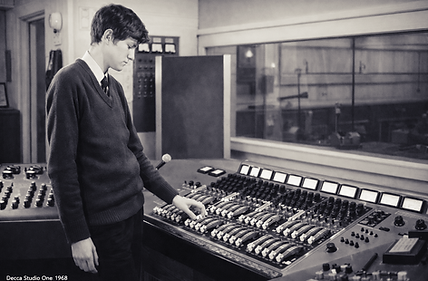
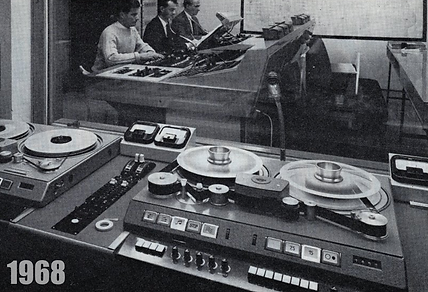
The Control Room of Studio 1 in 1968.
Studio 2
Size 21’ × 38’, height 16’ . Control room: 16’ × 20’ located on the lower ground floor, Studio 2 was a smaller, more intimate recording space, accessed via a staircase and rear corridor.
Studio 2 became the primary space for pop, rock, blues, and smaller ensemble recordings at Decca.
1972 - Equipment Specification.
Neve console-24 input, 16 output; mics - AKG, Neumann; Tape recorders - 3M 16-track. Scully 8-track, 2-track; Monitor speakers - Lockwood / Tannoy; amps - Quad.


Studio 2 in 1973
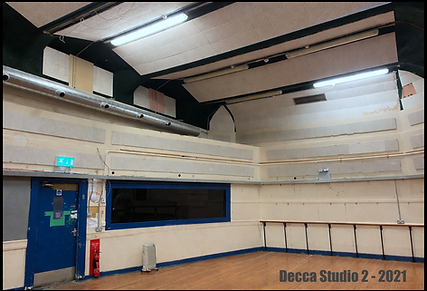
Studio 2 in 2021 after many years of being a rehearsal room for the Royal Ballet.
1954 – “Rock Island Line”
One of the most influential recordings in British music history took place in Studio 2.
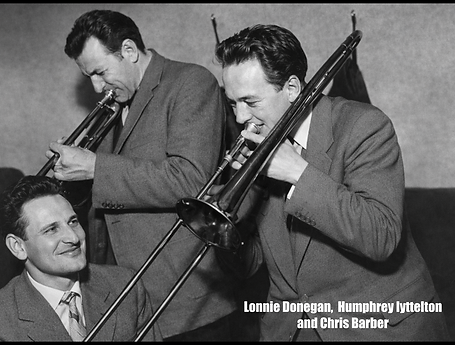
Lonnie Donegan, then banjo player with Chris Barber’s Jazz Band, recorded Rock Island Line as a quick, informal session at the end of a recording day. Alongside John Henry, it was intended as a minor addition to the album New Orleans Joys.Recorded live to tape with minimal instrumentation, the track was initially overlooked. When released as a single in 1955, however, it became a major hit in both the UK and US.It sparked the skiffle craze, inspiring thousands of young people to form bands. Among them was John Lennon, who went on to form The Quarrymen — a key step on the path to The Beatles.
Eight years later The Beatles would audition for Decca in Studio 2 which famously led to their rejection by label.


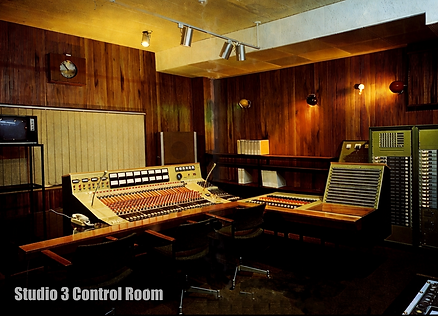
Studio 3 – 1961
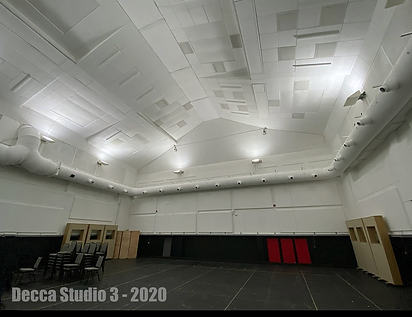
In 1961 Decca came up with their own version of Abbey Road Studio 1 by constructing a purpose-built studio at the rear of the complex.
Size 82’ × 50’, height 36’ Capacity: up to 100 musicians. For the first time, Decca could record full orchestras in-house.
1972 -Equipment Specification.
Decca console—20 input, 5 output; mics-AKG, Neumann; Tape recorders—Studer 4-track and 2-track


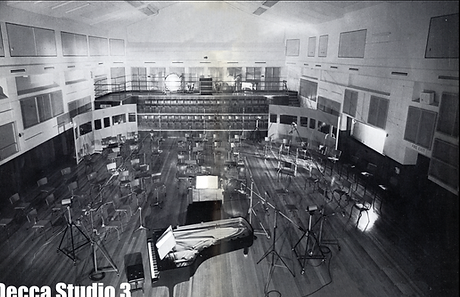
The Bing Crosby Sessions in July 1976 Studio 3
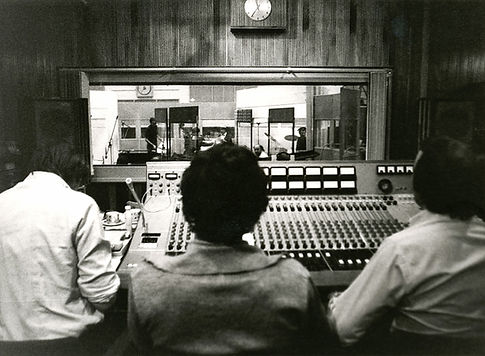
Pictured is producer Kevin Daly on the left, engineer Martin Smith on the right and Crosby's son and manager between them. You can see Crosby in the distance through the glass, in the centre of the picture. To the right of him is guitarist and composer Bryan Daly, and further right is Trevor Tomkins on drums.

The long corridor that led down to Studio 2 and 3.
Phase 4 Stereo – 1961
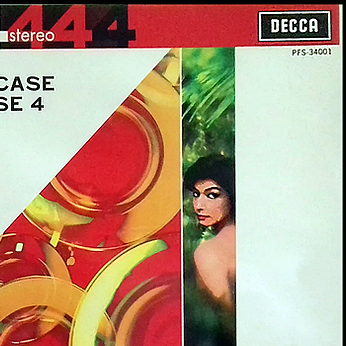
Decca launched Phase 4, an innovative recording system using multiple microphones and a 20-channel mixing desk to create a dramatic stereo image.Rather than replicating a traditional concert-hall perspective, Phase 4 placed the listener “inside” the orchestra. Early recordings were known for their extreme stereo separation, designed to showcase the capabilities of new home hi-fi systems.Initially focused on easy listening, artists included Ronnie Aldrich, Stanley Black, and Ted Heath.
1964 – Phase 4 Concert Series
The Phase 4 Concert Series brought this approach to classical music, featuring conductors such as Leopold Stokowski and Bernard Herrmann.
Although criticised by purists as unnatural, the recordings were hugely popular, with nearly 200 albums released.
Microphones used included Neumann M-50, M-49, KM-56, KM-53; Telefunken 251; AKG C-12; and Decca FR-1A and FR-1B.

1960s Developments
1964: The Zombies record She’s Not There
1966: First use of Dolby noise reduction
1966: Studio 1 upgraded with a 20-channel solid-state console
1967: The Moody Blues record Days of Future Passed, including Nights in White Satin
1970s Expansion
-
1971: Studio 2 fitted with a Neve 24-channel console
-
1972: Studio specifications updated across all rooms
-
1972: Decca opens Studio 4 at Tollington Park
-

Threshold Studios – 1974
In 1974, The Moody Blues leased Studio 1 and renamed it Threshold Studios, after their album On the Threshold of a Dream.
The control room was completely rebuilt around an API console, becoming the first Westlake-designed studio in the UK. The live room remained largely unchanged, apart from the addition of a drum booth.
Projects recorded there included:This Is The Moody BluesBlue Jays (Justin Hayward & John Lodge)Graeme Edge’s Kick Off Your Muddy BootsRay Thomas’s Hopes, Wishes and Dreams (1976)Long Distance Voyager (1980)


Decca Studio one when it became
'Threshold Studios'.

Closure
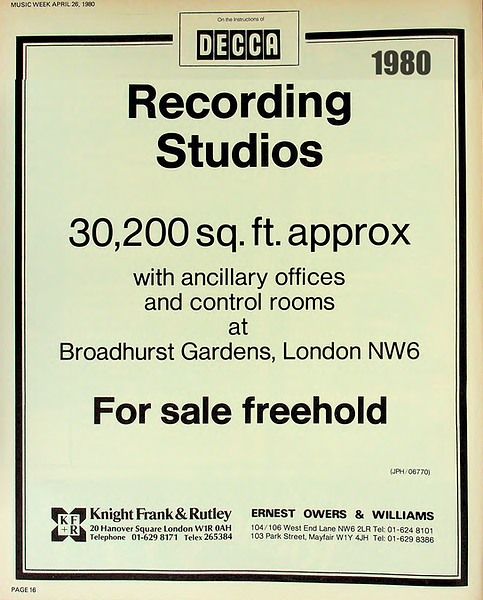
In 1980, Decca was sold to PolyGram and the studios were closed.
That was it; the end of an era.
The building later became rehearsal space for the English National Opera and was renamed Lilian Baylis House.
The building is now a Grade II listed structure and as of late 2025/early 2026, is undergoing restoration. Inside, Studio 1 and Studio 3 are more or less intact (minus equipment) and being returned to a functional recording facility.
Acknowledgements:
Many thanks to Martin Haskell .
Many thanks to Michael Daly for access to his photographic archive. Michael's site - a tribute to his Dad, Kevin Daly - can be found here with lots of great pictures and info about Decca.